In a kakao (instant message) from Korea, the bride and dear friend asked, “Could you please do a short speech during the wedding reception? … The only non-English speaking guests are my parents so you don’t need to prepare anything in Korean. Thank you, thank you.”
I had met the bride as an interpreter while serving as an adjunct staff on a homeland tour of Korea for adoptive families. She was marrying a man who, like me, had been adopted from Korea.
I was attending the wedding with a fellow adoptee, also a dear friend, from the tour staff (We’ve been through a lot over the years). I jumped into action and asked the other guest if she was okay if I started a draft for the speech. She graciously consented.
I have experience writing speeches. I delivered one at our tour’s farewell dinners in the past. The audience consisted of adoptive families from around the USA—majority White parents brimming with the revelry that comes with having gifted Asian American children a return to their birth country. Often community formed among adopted peers, bound by the recognition of ineffable sense memories and the fear of unintentional betrayal of adoptive parents when sharing them.
For the wedding tribute, the tone I went for was breezy. Light hearted. I would kick it off with the nickname I had for the bride, hwang-geum maknae and my translation for the event, “superstar little sister.” The speech would be a toast with curated anecdotes—attempting splashes of humor (which admittedly, is tricky when the other guests are strangers).
The day before the wedding, the bride asked, “Will I need a tissue for the speech tomorrow?” I emphatically joked, “No. You know how my speeches are.” I noticed a hint of confusion, possible disappointment. I wondered about a rewrite, but I was hesitant because I hadn’t had the opportunity to “read the room” (as opposed to the tour group audience for previous speeches with whom I had spent 2 weeks traveling).
The wedding guests were mostly the groom’s family and friends—New Englanders who sing Sweet Caroline as if embracing a childhood friend. On the flip side, the bride’s family had flown in on an almost 14 hour plane ride from Incheon less than a week before the wedding.
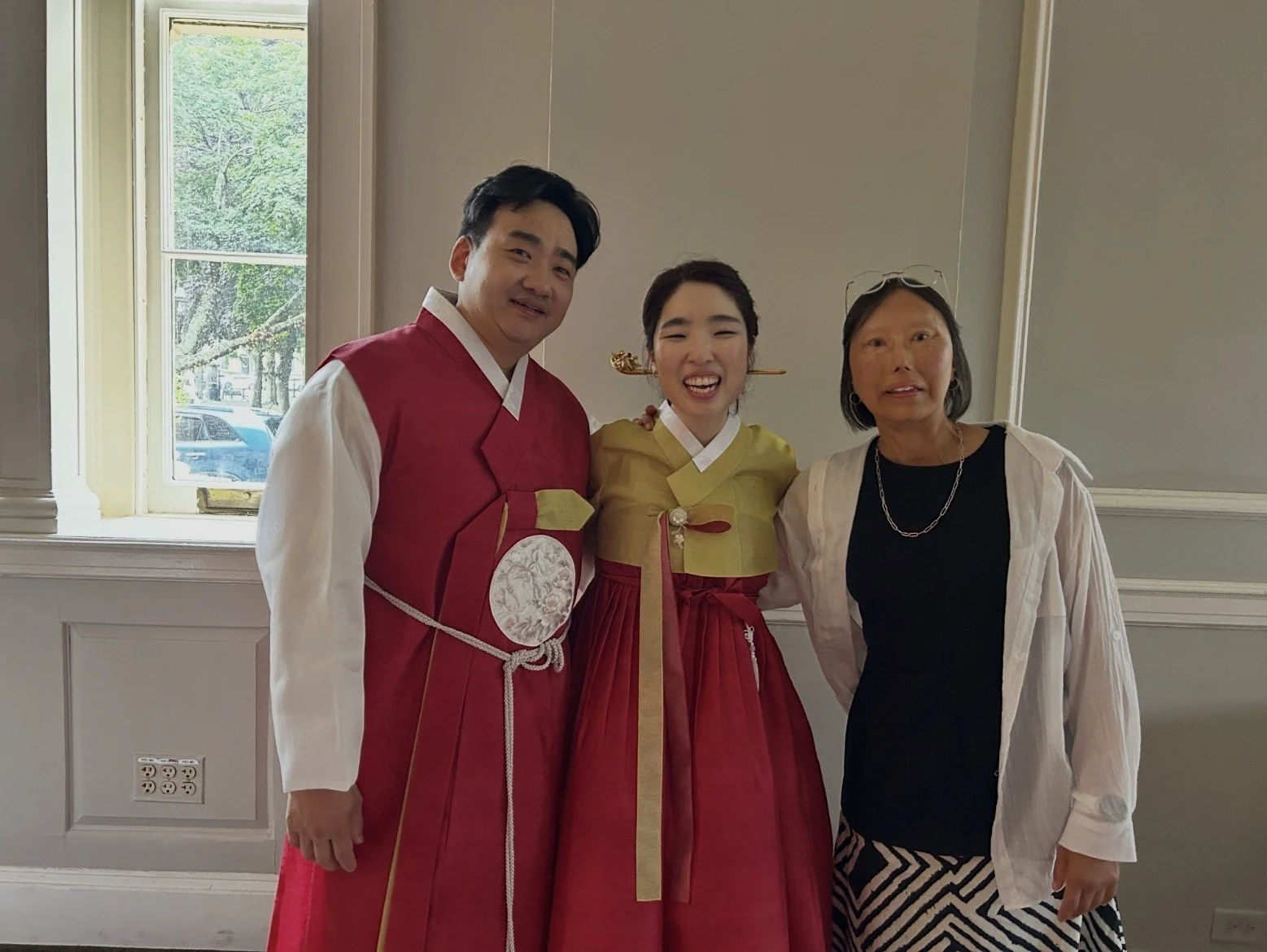
After a full Catholic mass, the couple, dressed in traditional hanbok, performed a Korean Paebaek Ceremony.
bowing to elders
serving tea to parents
catching seeds and / or nuts
biting a jujube seed
a piggyback ride
When the time came to step to the mic, my throat tightened. My eyes felt very warm. The words on my phone screen seemed suddenly to feel heavy, unwieldy to lift with my voice.
“. . . I like to call her (the bride) hwang-geum maknae or superstar little sister. This is because of the open heart she presents in welcoming us to our shared homeland . . .”
::awkward pause::
Later, I asked the bride if she would take on her husband’s family name or keep hers, as in the Korean tradition. She is keeping her family name. At the same time, I wondered if there was an updated translation of hwang-geum maknae, more relevant translation to her new family . . .
The crowd who enjoyed prime rib, mashed potatoes and ravioli rose to sing the last song:
Where it began
I can't begin to knowin'
But then I know it's growin' strong
Sweet Caroline
-Neil Diamond
This is getting heavy
Can you hear the bass boom?
I'm ready
Dynamite — BTS
