what 아리랑 arirang means to me
Arirang
At the risk of Posh Spice-ing the return of BTS (after military service), and making their big day about myself, I offer this reaction to their latest album release titled, “Arirang.”
Arirang is a Korean folk song that contains the both the bitterness of 한 han and the solidarity of 정 jeong. These are two Korean words that I once considered as possible tattoos for my inner wrists. I was drawn to the intensity not easily captured in English since Korean people identify these words as being uniquely Korean. The significance of this cannot be overstated for me as a member of the diaspora, a transracial adoptee.
When a song enters your life that you want to play through the open windows of your car in an attempt to change someone else’s life or be an embodiment of your inner self even fleetingly to those you pass, that’s arirang. The push pull of the individuality of the feelings it evokes mixed with the desire to connect with others while experiencing it.
I was first introduced to Arirang upon my return to Korea and fell in love immediately.
The unknown origins.
The longing for what is lost that can never be recovered.
The mutual heartbreak of the one who left and the one who remained.
I nearly wept when I attended the first BTS concert after the COVID break (November 2021) and did not see a performance of Arirang. This was an irrational expectation which I documented in a post from 2023.
I now choose to remember that experience differently. I was devoted enough to be present for a performance that has been scrutinized for the low energy crowd reaction, the lack of guest appearances and (devastatingly but unrealistically for me) no surprise performance of “Arirang” (which also didn’t happen at any other concert since the group performed thisin Paris in 2016.)
So to have Arirang be the title of BTS’s latest album is both 정 jeong and 한 han. Upon the revelation of the new album title, I felt seen and heard immediately. However, following the livestreamed Netflix concert people from around the world began searching up Arirang on YouTube and leaving comments about BTS being the conduit that led them there. My possessiveness was launched.
At the same time, YouTube delivered one of the most intriguing discoveries. Digging deeper into the connection between BTS’ choice of Arirang and the group’s hip-hop roots, the animated trailer for the new album squares the circle. The original recording of Arirang in the USA was by 7 Korean students who were attending Howard University, a historically black college / university. This story explains not only the video to the first single, Swim, but also why it might be sung in English.
It is also an attempt to respond, in part, to the accusations of cultural appropriation of Black culture. BTS acknowledge these roots in their early series, American Hustle Life, which does contain some problematic elements, but is gritty much like the early BTS aesthetic.
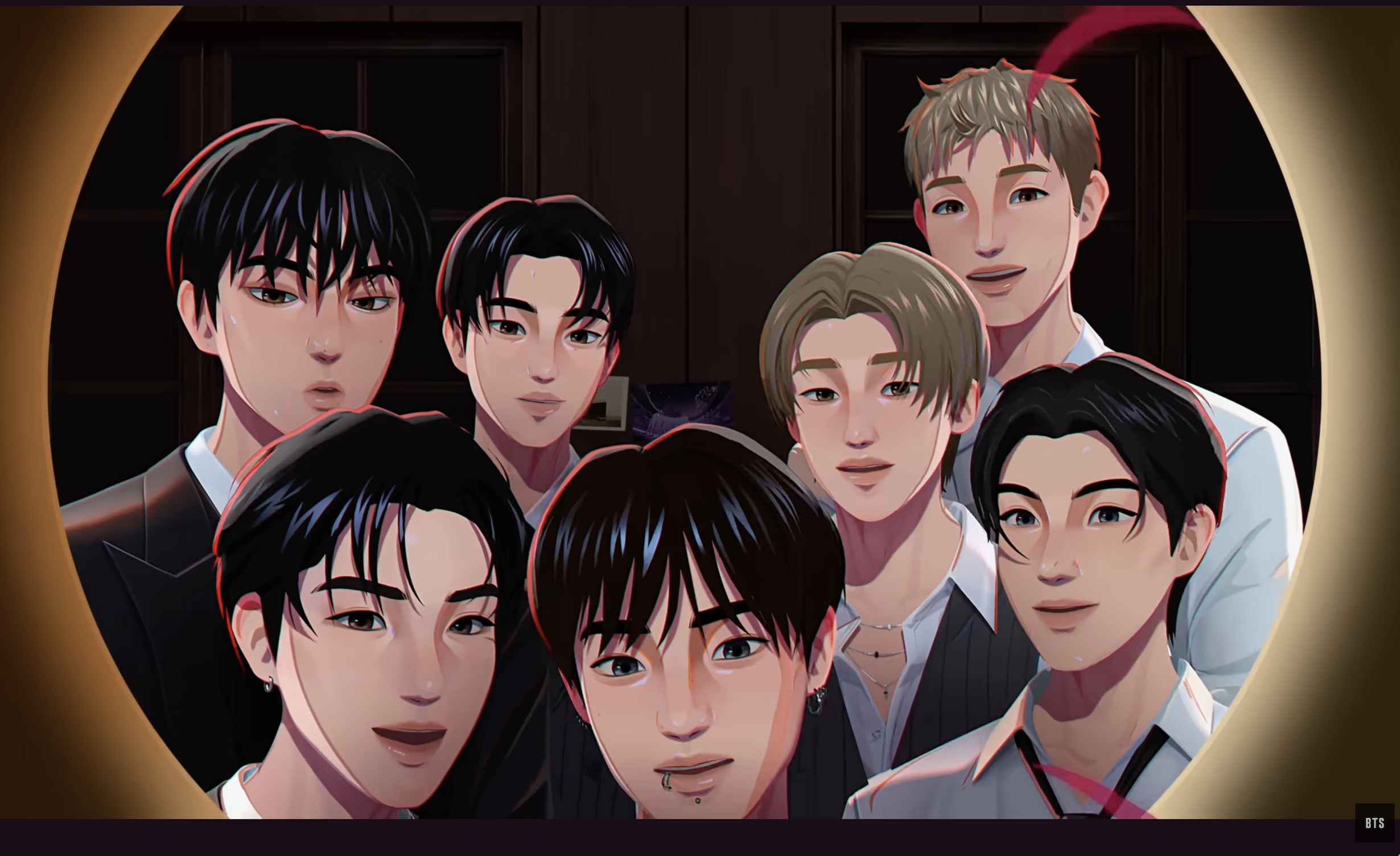
There are many dreams in our hearts.
-Arirang translation
A few album thoughts
NOTE: These thoughts contain historical references to BTS. They live in the space between onlookers for whom this section may be overwhelming and members of the Army 아미 (BTS fans) for whom these observations will be well worn tropes by now (48 hours after the album release).
Swim: The first single, Swim, conjured their single, Run. Not just for the imperative, but also for the connection between iconic underwater imagery in Run and the return to the sea in Swim. As a response, Swim contains the melodic repetition to surface and move forward (with the double reference to the historic recording of Arirang in the USA).

Don’t tell me bye bye.
-Run
Body to Body: This song contains a pansori version (one of my favorite genres) of Arirang near the end. Why arirang is at the end of a song which is clearly a stadium anthem is intriguing. Is the intensity of the connection between performers and concert adoration one way that BTS experiences arirang? Intimacy that transcends the distance. The sentiment reminded me of a more mature perspective on Stay.
Hooligans: This songs feels like BTS clowning us. So many connections for long-time fans of their early songs, particularly, Boyz with Fun.

this beat goin’ hooligan
-Hooligan
(image from Run video)
Aliens: So much Korean culture for international fans. It’s the Paldogangsan (rivers and mountains of the 8 provinces) of Arirang. Shoes off at the door! One of my album favorites.
FYA: An updated Fire (on all my playlists) is tough. 불타오르네! FYA is the Hong Jang-Mi of Undercover Miss Hong; in which Fire is Hong Geum-Bo, of course. (Obscure reference to a recent Kdrama.)
2.0: Getting lost in the rhythm. Really vintage BTS! Love this track for its homage to the group’s roots in their own and Korean percussive past. Probably my favorite track. The Run BTS! of this album?
No. 29: The Divine Bell of King Seongdeok or the Emile Bell has it all - a legend of child sacrifice, a dragon, a lotus flower, 1:37 of haunting 에밀레 “Mommy” and designation as the 29th National Treasure of Korea.
they don’t know ‘bout us: If Huh? by Agust D made one of your playlists, then press + to add this one. This song feels like big brother energy, “Slow your roll.” One of my favorite subjects of BTS’s most recent songs is how they experience the disconnect between what is perceived and what is authentic. And how the process of evaluation is vital, as it factors into the equation.
One More Night: Unlike what RM did with No and ON, this reversal of Just One Day has not quite had the time to reach the endearing status of 하루만. But cheering it on, nevertheless.
